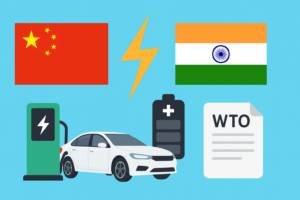


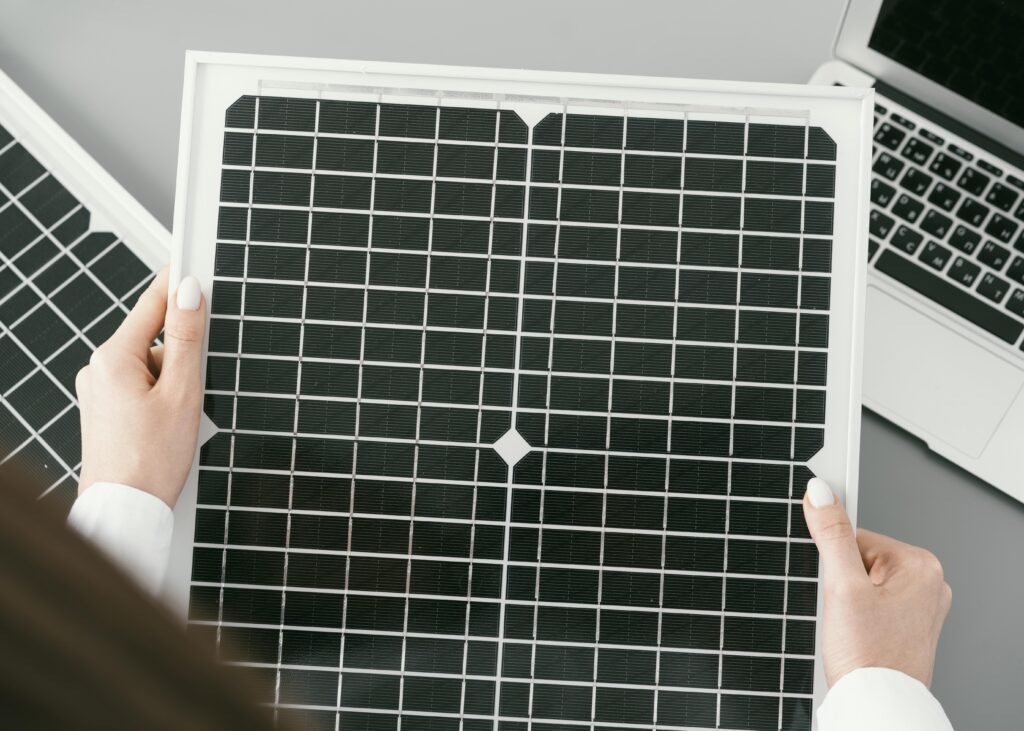
India has taken a major step to protect its domestic solar industry by imposing a 30% anti-dumping duty on solar cell imports from China. The duty will apply to both standalone solar cells and those used in modules and will remain in force for the next three years.
This move comes after a detailed investigation by the Directorate General of Trade Remedies (DGTR), which found that cheap imports from China were causing significant injury to Indian manufacturers.
What is Anti-Dumping Duty?
Anti-dumping duty is a trade protection measure imposed when a country finds that a foreign product is being sold at unfairly low prices (below its normal value), harming the local industry. The additional duty ensures a level playing field for domestic manufacturers.
The Investigation
- The probe was initiated in December 2024 after major Indian solar companies—including FS India Solar Ventures, Jupiter International, RenewSys India, Tata Power Solar, and TP Solar—filed a joint complaint.
- The period of investigation was April 1, 2023, to March 31, 2024, while the injury review period extended back to 2020–21.
- Key findings by DGTR:
- The dumping margin on Chinese imports was 105–115%.
- The injury margin to Indian manufacturers was 35–40%.
- Imports from China surged—up by 271% during the injury period and an additional 63% in the following period.
- The profitability and cash flows of Indian solar cell makers experienced a sharp decline.
- China accounted for 77% of total solar cell imports into India.
Based on these findings, the government concluded that imposing a 30% anti-dumping duty was necessary.
Why This Decision Matters
- Protecting Domestic Industry
Indian manufacturers were struggling to compete with artificially cheap imports. The duty gives them breathing space. - Boosting Investment in Solar Manufacturing
A fairer market will encourage more investment in domestic solar cell and module manufacturing, aligning with India’s renewable energy goals. - Reducing Dependence on China
Currently, India is heavily reliant on Chinese imports. This step pushes India towards diversifying its supply chain. - Ensuring Fair Competition
The move discourages unfair trade practices and promotes healthy competition in the market.
Challenges and Risks
While the duty offers protection, it may also create short-term challenges:
- Higher Costs: Solar modules may become more expensive, raising project costs.
- Project Delays: Developers dependent on cheap Chinese imports may face delays in sourcing alternatives.
- Trade Retaliation: China could respond with countermeasures, affecting Indian exports.
- Domestic Capacity Concerns: If Indian manufacturers fail to scale up quickly, supply shortages could arise.
The Long-Term Outlook
If successful, this policy could:
- Strengthen India’s solar manufacturing ecosystem under Make in India.
- Reduce supply chain vulnerabilities.
- Position India as a potential exporter of solar cells in the future.
- Enhance India’s role in the global clean energy transition.
However, the effectiveness of this measure will depend on whether Indian companies can ramp up production, maintain quality, and stay cost-competitive.
Conclusion
The 30% anti-dumping duty is both a protective shield and a challenge. While it safeguards Indian solar manufacturers from unfair trade practices, it also puts the spotlight on domestic players to rise to the occasion, scale up production, and contribute to India’s renewable energy ambitions.